

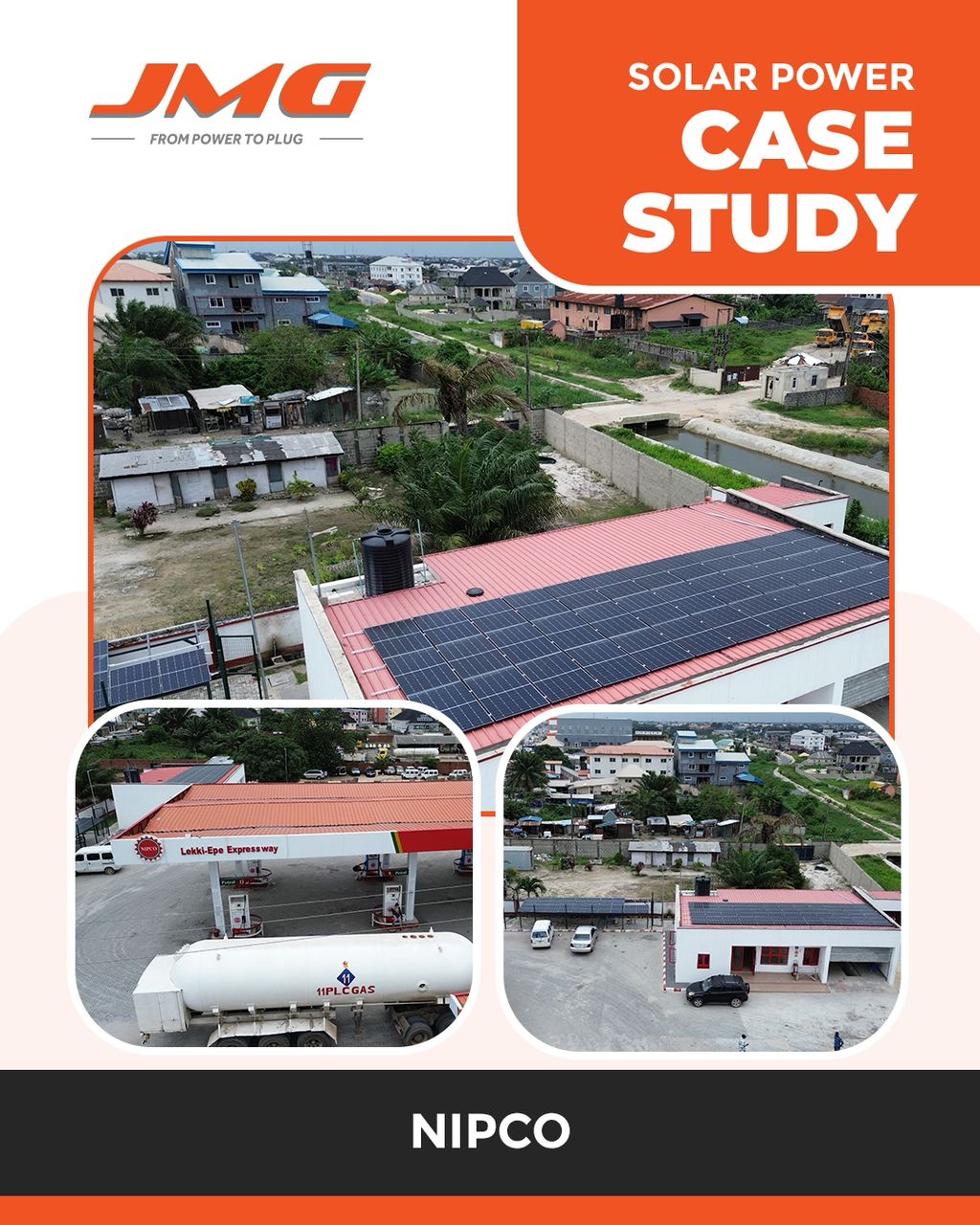
JMG Limited has successfully commissioned hybrid solar power systems at three major NIPCO Plc fuel stations, delivering clean, reliable energy and cutting annual energy costs by over ₦44 million.
The project, completed between May and June 2025, involved the installation of advanced hybrid solar systems at NIPCO stations in Gwagwalada, Lekki and Mpape. The installations combine high-efficiency solar panels, lithium battery storage and smart hybrid inverters to provide round-the-clock power for fuel pumps, lighting and office operations.
Since commissioning, the stations have reportedly operated with zero reliance on grid electricity or diesel generators during favourable weather conditions, significantly reducing operating costs and emissions.
Speaking on the project, Head of JMG’s Hybrid Solar Division, Abbass Hussein, said the initiative demonstrates that energy-intensive sectors such as fuel retail can transition to clean and cost-effective power without compromising performance.
He noted that the systems have delivered estimated annual savings of ₦44.4 million, generated about 88,535 kilowatt-hours of clean energy yearly and reduced carbon emissions by approximately 43.8 tonnes.
Hussein added that the scalable nature of the hybrid systems makes them adaptable to different operational needs, offering a practical pathway for businesses seeking to lower emissions and energy expenses.
Confirming the impact of the installations, NIPCO’s Station Manager at Gwagwalada, Idoko Jacob, said the solar systems have fully met the stations’ daily energy needs on bright-weather days, with generator support only required during extended periods of poor weather.
Across the three stations, the installations now cover between 80 and 100 per cent of daily energy demand. The Gwagwalada station records an estimated annual solar output of 42,450 kilowatt-hours, saving ₦15.6 million and cutting carbon emissions by over 15 tonnes yearly.
The Lekki station generates about 3,635 kilowatt-hours annually, saving ₦12 million, while the Mpape station produces approximately 42,450 kilowatt-hours, translating to ₦16.8 million in yearly savings.
With generator use reduced to near zero, the project underscores the growing viability of renewable energy solutions in Nigeria’s commercial and industrial sectors.
JMG said it remains committed to delivering efficient and reliable solar solutions for homes and enterprises, supporting Nigeria’s transition to sustainable energy through innovative technology and tailored power systems.